
Maritime Disputes in the Indian Ocean: Legal Perspectives

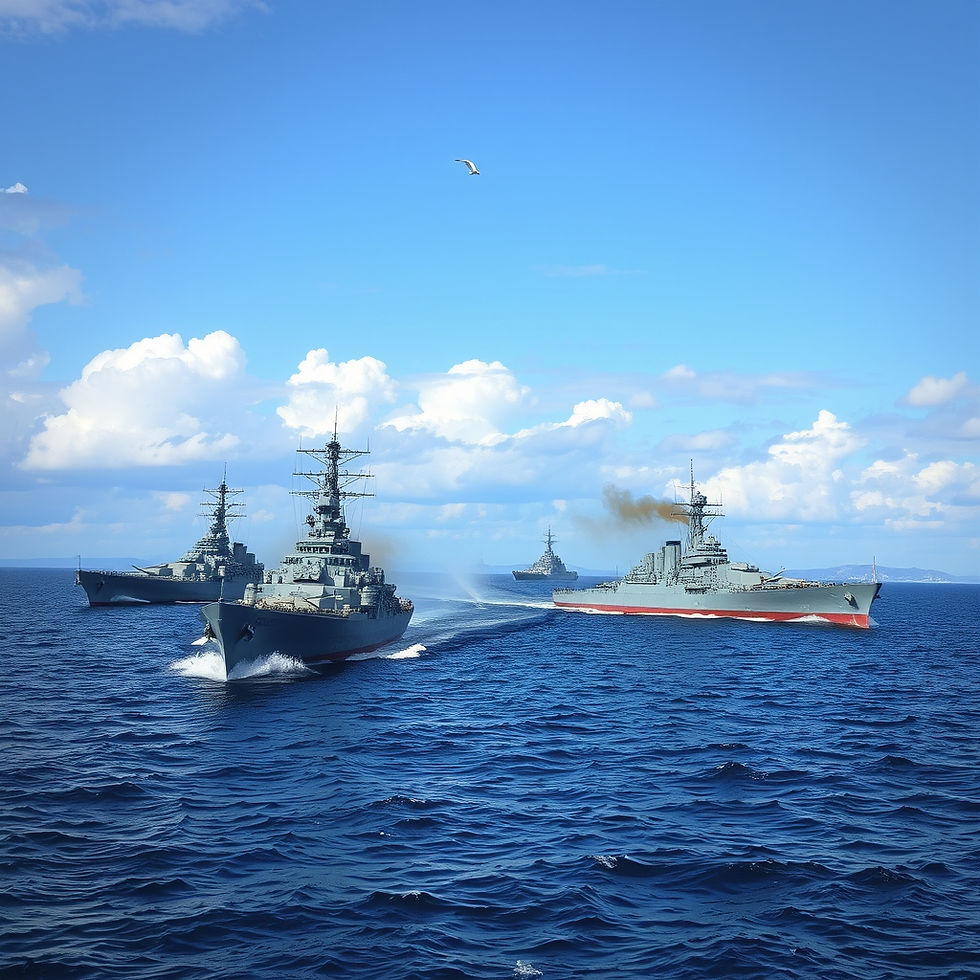
The Indian Ocean, often described as the “lifeline of international trade,” is one of the most strategically significant maritime regions in the world. It connects Asia, Africa, and the Middle East, serving as a vital corridor for energy supplies, global commerce, and naval operations. However, its importance has also made it a hotspot for maritime disputes, ranging from territorial claims and resource rivalry to navigational rights and environmental concerns.
Legal Framework Governing Maritime Disputes
The primary international legal instrument governing maritime disputes is the United Nations Convention on the Law of the Sea (UNCLOS), 1982. India, along with most Indian Ocean littoral states, is a signatory. UNCLOS provides:
Territorial Sea (12 nautical miles) – Full sovereignty of coastal states.
Exclusive Economic Zone (EEZ – 200 nautical miles) – Rights to explore and exploit marine resources.
Continental Shelf – Rights over seabed resources beyond EEZ under certain conditions.
Freedom of Navigation – Ensuring safe passage for international trade.
Disputes often arise when states interpret these provisions differently, especially regarding overlapping EEZs, continental shelf claims, and navigational rights.
Key Maritime Disputes in the Indian Ocean
India–Sri Lanka Fishing Disputes
Frequent clashes occur in the Palk Strait, where Indian fishermen are accused of crossing into Sri Lankan waters.
Legal issues involve sovereignty, livelihood rights, and enforcement of maritime boundaries.
India–Bangladesh Maritime Boundary
Resolved in 2014 through arbitration under UNCLOS, which awarded Bangladesh a significant portion of disputed waters.
This case is a landmark in peaceful dispute resolution.
India–Maldives EEZ Overlaps
Disputes over fishing rights and resource exploration occasionally arise due to overlapping EEZ claims.
Environmental Disputes
Recent cases, such as the Kerala High Court’s admiralty suit against MSC cargo ships for marine pollution, highlight the growing importance of environmental accountability in maritime law.
Strategic and Geopolitical Dimensions
The Indian Ocean is not only about legal disputes but also about geopolitical competition:
China’s presence through its “String of Pearls” strategy has raised concerns about freedom of navigation and military dominance.
Piracy off Somalia and illegal fishing activities have added layers of complexity.
Resource rivalry over oil, gas, and minerals in seabeds intensifies disputes among coastal states.
Legal Perspectives and India’s Stance
India emphasizes:
Compliance with UNCLOS as the guiding principle.
Peaceful dispute resolution through arbitration and bilateral negotiations.
Protection of maritime environment under the Admiralty (Jurisdiction and Settlement of Maritime Claims) Act, 2017.
Strategic autonomy in safeguarding its maritime boundaries while promoting regional cooperation.
Challenges in Resolving Maritime Disputes
Ambiguity in UNCLOS provisions regarding continental shelf extensions.
Overlapping EEZs among neighboring states.
Enforcement difficulties in vast oceanic spaces.
Balancing sovereignty with global commons like freedom of navigation.
The Way Forward
Strengthening Regional Cooperation – Through forums like the Indian Ocean Rim Association (IORA).
Environmental Safeguards – Stronger legal mechanisms against marine pollution and overfishing.
Technology Use – Satellite mapping and AI for precise boundary enforcement.
International Arbitration – Encouraging states to resolve disputes through neutral platforms rather than military escalation.
Conclusion
Maritime disputes in the Indian Ocean reflect the intersection of law, geopolitics, and economics. While UNCLOS provides a robust framework, effective resolution requires regional cooperation, respect for international law, and environmental responsibility. For India, safeguarding its maritime interests while promoting peaceful dispute resolution remains central to its legal and strategic approach.
The Indian Ocean will continue to be a theatre of contestation, but with strong legal frameworks and cooperative mechanisms, it can also become a model for peaceful maritime governance.

Comments